Mobile Grooming for Senior Dogs and Cats
Why mobile is gentler on arthritic joints, fragile skin, and stress-sensitive senior pets. Shorter sessions, vet coordination, and humane limits.
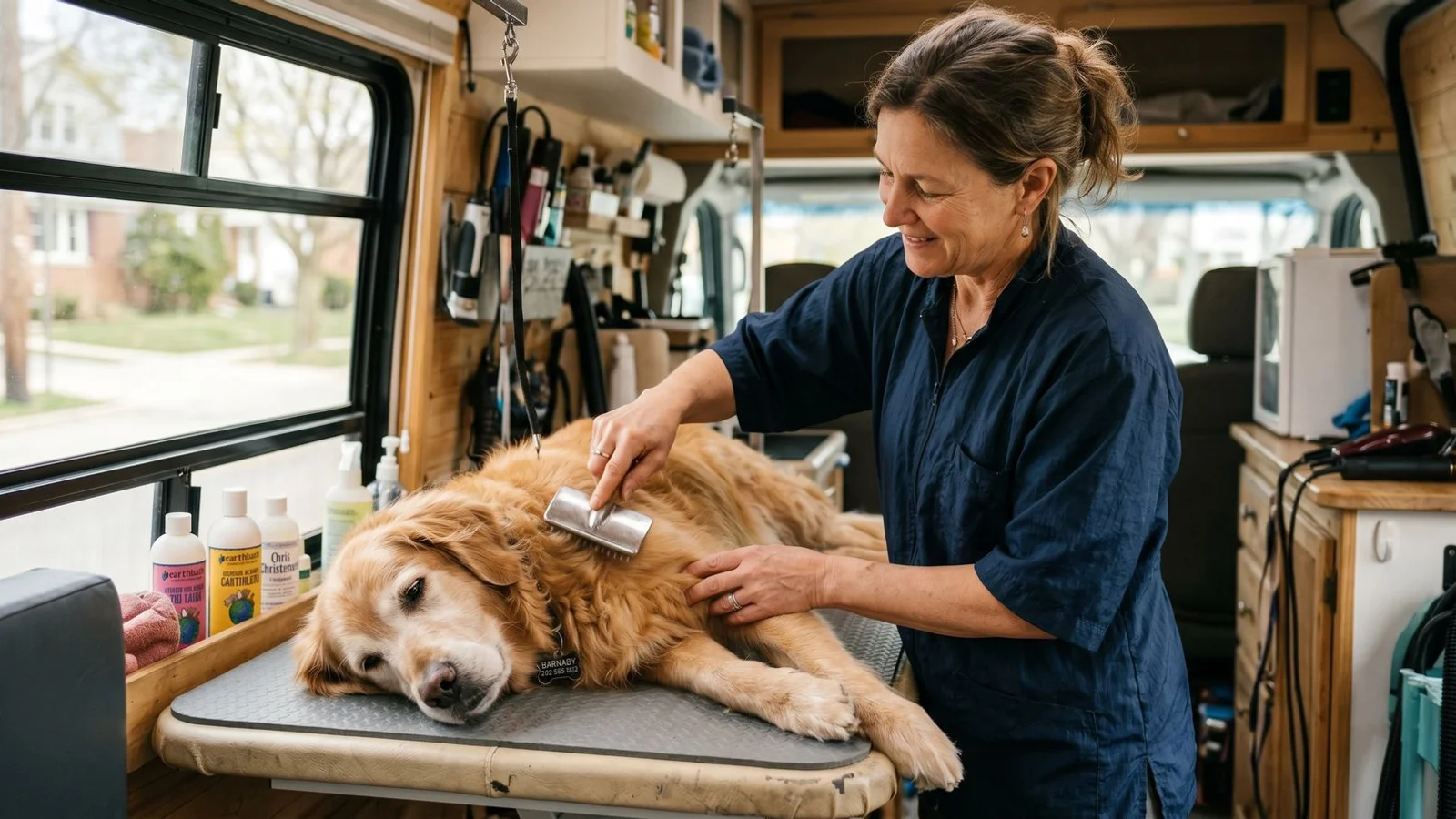
You know how a grooming routine that worked perfectly when a dog was six suddenly becomes an ordeal by the time they hit fourteen? From what we have seen, that transition is a major turning point for pet health. Senior dogs and cats experience handling very differently than their younger counterparts.
Aging joints stiffen, skin grows fragile, and sensory acuity naturally changes. Decades of past grooming sessions heavily shape how these pets tolerate handling today. We find that an approach that worked perfectly years ago rarely translates well to a senior pet.
Mobile grooming for senior dogs and cats addresses these exact needs in ways a traditional salon environment fundamentally cannot.
Let us break down the main reasons this happens and walk through the exact workarounds our team uses.
Why salon environments are harder on seniors
Pet owners often underestimate the sheer physical toll of a traditional grooming appointment. A standard salon visit typically stretches from three to four hours. Our experience shows that healthy four-year-old dogs handle this lengthy event just fine.
For a 14-year-old dog with arthritis, that marathon is exhausting. We know that standing on a hard floor in a crate for 45 minutes between sessions is genuinely painful for aging joints. The heart rate of a senior pet often spikes the moment they walk into a loud, unfamiliar building.
Our mobile service directly inverts most of those stressful variables. The entire trip shrinks from a 30-minute car ride to a ten-foot walk from your front door. We keep the total session between 60 to 90 minutes.
This structured pacing allows the pet to return to their comfortable living room immediately afterward.
| Grooming Environment | Average Duration | Best Suited For |
|---|---|---|
| Traditional Salon | 3 to 4 hours | Healthy, well-socialized younger pets. |
| Mobile Grooming | 60 to 90 minutes | Senior pets, anxious dogs, and felines. |
| Sedation Grooming (Vet) | Varies by clinic | Pets with severe pain or extreme aggression. |
Joint considerations
Over 80 percent of dogs develop some form of osteoarthritis by age eight, according to 2025 veterinary data. This statistic completely changes how a professional groomer must operate. We modify our approach specifically for pets dealing with hip dysplasia and general joint stiffness. Small adjustments make a massive difference in comfort, especially when grooming an arthritic dog.
- Padded surfaces. Standing on a thin rubber mat for 90 minutes hurts. We use thick padded grooming surfaces to protect elbows and hips. Lowering the height of the working table minimizes the dangerous climb up for senior pets.
- Built-in position changes. A senior dog should never stand for a full session. We allow a brief stand for the bath and dry, then encourage a sit or lie-down for the finish. Changing positions every 10 to 15 minutes prevents debilitating stiffness.
- Shorter sessions. A senior groom usually wraps up in 60 to 75 minutes. We do less per visit, but schedule appointments more frequently if needed.
- Low-velocity drying. Standing still through a blasting high-velocity dry is too much for arthritic joints. We swap out heavy dryers for lower-pressure equipment and use a Happy Hoodie fabric band. This simple tool reduces loud noises and allows for comfortable, longer towel-drying.
Our team applies these exact same principles at a smaller scale for older cats. A senior feline gets to pick their own comfortable position rather than conforming to a strict standing protocol.
Skin considerations
Senior dog grooming requires a gentle touch because their skin is significantly more fragile, thin, and inelastic than the skin of a younger animal. It heals much slower from minor abrasions. We focus on preventing irritation before it starts.
- Slower brushing pressure. A slicker brush used at standard pressure on a 12-year-old dog can cause brush burn. We dial back our hand pressure significantly to protect delicate areas.
- Gentle mat removal. Tight mats on senior skin should usually be shaved instead of brushed out. We know the skin underneath simply cannot take the pulling force.
- Sulfate-free shampoo by default. Harsh surfactants like SLS and SLES strip away protective lipid barriers, triggering a miserable dry-itch cycle. We strictly use hypoallergenic, vegetable-based soap formulas without chemical preservatives like DMDM Hydantoin. These gentle washes prevent contact dermatitis unless a specific medicated bath is required.
- Continuous skin assessments. The washing process provides a perfect opportunity to feel for new lumps, unfamiliar growths, or hot spots. We act as an early warning system to catch issues that owners might miss under thick fur.
Professionals will always photograph a concerning lump, note its location, and recommend a vet check. We are not diagnosing medical conditions, but our team often serves as the first set of trained eyes on a dog’s skin in months.
Stress sensitivity
Aging pets lose their ability to regulate stress hormones efficiently. A 2023 veterinary study showed that standard clipper grooming raises salivary cortisol levels, and that stress can linger for a full 24 hours. These stress events frequently trigger skin flares, gastrointestinal upset, and joint inflammation that persist for days.
We built our mobile environment to specifically target and reduce these chemical stress responses.
- The van stays parked in a familiar location like your driveway.
- We provide one groomer for the entire session to avoid scary handoffs.
- Your pet avoids exposure to barking dogs or unfamiliar scents.
- We keep owners nearby to prevent separation anxiety.
- Sustained one-on-one petting during the session actively lowers cortisol.
For senior cats specifically, mobile grooming is often the only viable choice. We find that forcing an old cat into a chaotic salon environment produces worse behavioral outcomes than skipping their old cat grooming session entirely.
Vet coordination
Many senior pets develop complex medical histories that require careful planning. We actively coordinate with your veterinarian around several major health categories.
- Cardiac conditions. Heart valve disease is the most common heart issue in older dogs, while senior cats often face hypertrophic cardiomyopathy. We limit session lengths, physical restraint, and dryer use to avoid stressing a compromised heart.
- Endocrine disorders. Conditions like Cushing disease, hypothyroidism, or diabetes heavily impact skin health and stress tolerance. We adapt our techniques based on these systemic changes.
- Recent surgeries or injuries. A clear medical history tells us exactly which sensitive areas to avoid. We adjust our physical handling to keep healing joints safe.
- Medication interactions. Certain prescription medications dictate our grooming product selection. We carefully check for drug-shampoo interactions to prevent adverse topical reactions.
Your veterinarian should always have the final say on whether grooming at home is appropriate for a medically fragile pet. We gladly defer to their expert judgment if a sedated medical groom is deemed safer.
When sedation grooming is the right call
A fear-free approach still might not be enough for some highly sensitive animals. We recognize that certain senior pets cannot safely tolerate any traditional grooming session. The most common scenarios requiring medical intervention include severe arthritis where any touch causes pain, advanced cognitive dysfunction, or severe heart conditions.
A veterinary clinic can perform a sedation groom to handle basic hygiene work like bathing, nail trimming, and sanitary clipping. We remind clients that this is a major medical procedure involving three separate costs. You will typically pay for the initial vet consultation, the medical sedation itself, and the actual grooming fee.
This route is undeniably more expensive, but it remains the kindest option for a pet in severe distress. We regularly refer clients to specialized vet groomers for these complex cases.
What a senior session typically covers
Routine maintenance looks quite different for an aging companion without major medical complications. We focus heavily on hygiene and comfort rather than elaborate styling. A typical mobile session includes:
- Gentle, low-pressure brushing to protect thin skin.
- Bathing with hypoallergenic, vegetable-based shampoo.
- Towel-drying and low-heat blow-drying without high-velocity tools.
- Slow nail grinding instead of sharp clipping.
- Sanitary trimming and pad cleaning for better traction.
- A brief skin assessment with notes provided to the owner.
Specialty cuts are rarely necessary for seniors who just want to be comfortable. A 14-year-old Goldendoodle does not need a perfect teddy-bear cut. We prioritize leaving them with a clean, manageable coat that will not mat for the next six weeks.
Owners dealing with overgrown nails or mat issues can rely on our patience and judgment-free approach. For senior cats specifically, see our mobile cat grooming page for what dog-free van blocks enable.
The right mobile grooming for senior dogs and cats honors both your pet’s comfort and their dignity. We built our mobile grooming services exactly for that purpose. Contact us today to schedule a comfortable, stress-free appointment for your senior companion.
Frequently Asked Questions
Is grooming safe for a 14-year-old dog?
What if my senior pet has incontinence?
Should I lower expectations on the cut?
Ready to book a fear-free driveway spa?
We confirm pricing, breed-specific notes, and arrival window before scheduling. Same-week appointments throughout Durham, RTP, Cary, and Chapel Hill.