Why Fear-Free, Cage-Free Grooming Matters for Anxious Pets
What Fear Free certification means in practice — calming techniques, body-language reading, and why the cage-free van environment changes everything.
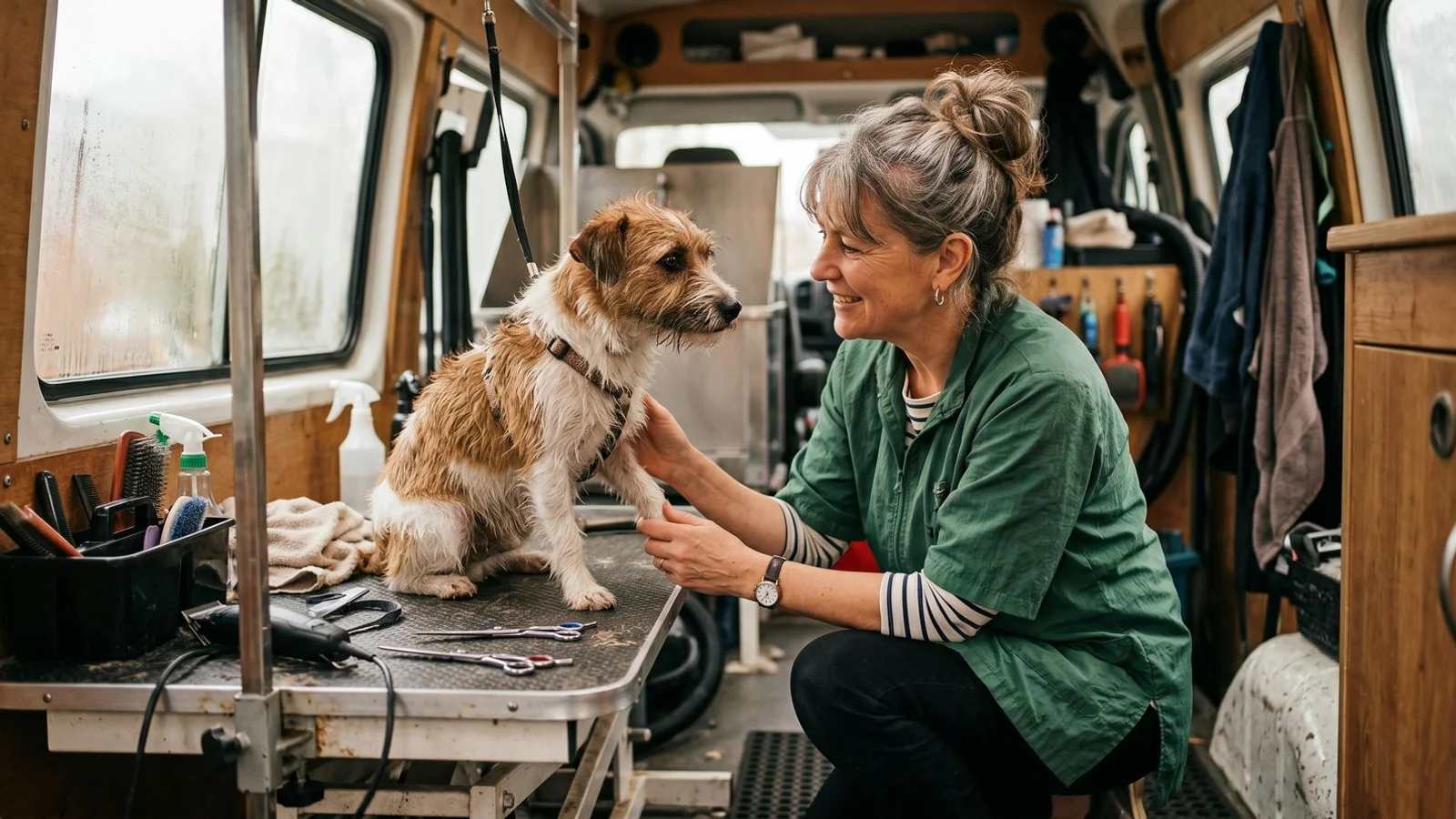
If you have ever taken a nervous dog or cat to a loud salon, you already know why fear free cage free pet grooming is becoming so popular.
We see the failure cycle of traditional methods frequently in our professional practice. The dog refuses to enter, panics in the bath, fights the dryer, or shuts down entirely on the table.
The standard groomer either pushes through the panic or sends you home unfinished.
This is actually a widespread issue across the United States. A 2025 Texas A&M University study of over 50,000 dogs found that nearly 50% display fear or anxiety behaviors.
Our team uses specialized handling and calm environments to break that stressful cycle completely.
Let’s look at the actual data, examine what this certification involves, and explore exactly why it changes outcomes for the pets that need it most.
What Fear Free certification actually means
Fear Free is a rigorous certification program for pet professionals like veterinarians, trainers, and groomers. Dr. Marty Becker founded the initiative, and the specific animal groomer certification launched in 2018 to address salon anxiety. Over 265,000 veterinary and pet professionals nationwide have completed these training modules.
We require our staff to complete this multi-module course to ensure every pet gets the best care. The curriculum covers a wide range of essential topics.
- FAS recognition: Identifying Fear, Anxiety, and Stress signals in dogs and cats before they escalate.
- Low-stress handling techniques: Utilizing gentle alternatives to scruffing, heavy restraint, or muscling through a groom.
- Environmental design: Managing lighting, controlling loud noises, and using specific scents to calm the area.
- Pace and break-building: Integrating natural pauses into routine procedures to give pets a breather.
- De-escalation protocols: Implementing specific steps to calm a pet before they reach a state of panic.
This is a real certification, not just a clever marketing label. Our groomers read body language constantly throughout the appointment. Professionals in this program take breaks before a pet escalates, use minimum-restraint handling, and stop completely if continuing causes genuine distress.
We stand in direct opposition to the outdated idea that a dog simply has to learn to deal with it. The methodology requires continuing education based on current veterinary behavior research.
Why cage-free matters
Cage-free styling is a separate concept from fear-free handling, but they often go together to create a calm environment. A traditional salon model relies heavily on crates between the bath and the finishing stages. Dogs get bathed, wait in a noisy kennel for the dryer, and then sit in another crate while waiting for the haircut station.
We know this crate time compounds the negative experience for dogs that already find salons stressful. U.S. mobile pet grooming is booming as a result, with the market expected to hit $611.5 million by 2035 because owners want to reduce this anxiety.
| Feature | Traditional Salon Model | Cage-Free Mobile Model |
|---|---|---|
| Handler Count | Multiple people (bather, dryer, groomer) | One dedicated professional |
| Waiting Time | Hours spent in a holding crate | Zero kennel time |
| Noise Level | High (barking dogs, multiple dryers) | Low (controlled climate, one quiet dryer) |
Cage-free dog grooming means the same professional handles the entire session from start to finish. The pet never enters a holding kennel.
Our mobile van setup defaults to this exact structure. There is only one dog in the van and only one groomer.
We recommend this approach for dogs dealing with separation anxiety or general handler-attachment patterns. Cage-free environments make the difference between a tolerable session and a highly distressing one.
What body-language reading actually looks like
The single biggest skill differentiator between a fear free certified groomer and a standard operator is real-time body-language reading. Veterinary behaviorists call many of these subtle actions “displacement behaviors”. Dogs and cats perform these actions when they suppress the urge to run away and replace it with a seemingly random movement.
We watch carefully for these early warning signs during every single appointment.
Canine Stress Indicators
Most pet owners recognize a growl, but dogs communicate discomfort much earlier. A few examples of the subtle signals to watch for include:
- Pinned ears: Ears laid back tight against the skull.
- Whale eye: The whites of the eyes become visible at the side.
- Lip-licking: Flicking the tongue outside of a food context.
- Yawning: Often a major displacement stress signal rather than simple tiredness.
- Physical stiffness: A rigid body posture and a tightly tucked tail.
- Avoidance: A complete refusal to make eye contact with the handler.
Feline Stress Indicators
Cats show stress differently than dogs. We pause our grooming immediately if a cat displays any of the following:
- Crouched posture: Body held low with legs tightly tucked underneath.
- Dilated pupils: Eyes fully black regardless of the room lighting.
- Tail movement: The tip flicks rapidly or the whole tail thrashes.
- Ear rotation: Ears turned sideways like airplane wings or pinned flat back.
- Vocalization: Low guttural growling or sharp hissing.
- Sudden grooming: Frantically cleaning themselves as a displacement behavior.
Most generic groomers know these signals exist, but the difference lies in when and how the professional reacts. Our team pauses at the very first signal to give the pet up to 60 seconds to reset. The groomer then either resumes at a slower pace or shifts the approach entirely.
A generic operator often pushes through the early signals, which guarantees escalation. A stiff body becomes a snap, a whale eye becomes a freeze, and a pinned ear becomes a total panic.
We know the pet that gets worse with grooming over time is almost always a pet whose early body-language signals were ignored. The entire methodology focuses on preventive action, not reactive force.
Specific techniques used
Beyond body-language reading, the day-to-day work requires a very specific set of handling skills. We utilize these techniques to keep the pet below their panic threshold. These strategies build trust and encourage voluntary cooperation.
- Slow tool introduction: New tools like clippers or scissors appear at a distance first. The groomer runs the dryer at a low intensity before using it directly on the pet.
- Frequent breaks: Every 10 to 15 minutes of work includes a mandatory pause. The brushing stops, the pet gets to reposition, and the handler offers treats if appropriate.
- Position-of-choice handling: The pet picks their own position whenever possible. Handlers let them sit, stand, or lie down rather than forcing them into a rigid stance.
- Voluntary cooperation: Tolerant pets learn verbal cues like “paw up” rather than being physically lifted. This builds long-term cooperation and confidence.
- Targeted counterconditioning: When a pet associates a specific tool with stress, the professional pairs that item with a positive reward. The groomer offers high-value treats before each new use to gradually rebuild tolerance.
Anxious dog grooming often requires a much slower timeline. Our most challenging cases usually involve rescues with grooming trauma or senior dogs with decades of bad salon associations.
The groomer often schedules a desensitization-only visit before attempting any actual haircutting for these clients. The pet simply enters the van, experiences a few minutes of exposure to the tools without being touched, and leaves with positive associations to build on.
What we do when fear-free isn’t enough
Some pets suffer from anxiety or behavioral issues that exceed what non-medical grooming can safely manage. We must prioritize the safety of both the animal and the handler in these severe cases. Pushing the methodology past its limits does not help anyone.
The most common scenarios requiring medical intervention include:
- A pet with a documented bite history who cannot be handled safely without medical sedation.
- A dog whose anxiety triggers severe physical escalation, such as vomiting, defecation, or extreme trembling at any handling attempt.
- A senior pet suffering from cognitive decline that prevents any predictable response to normal handling.
Our protocol requires an immediate referral to a veterinary behaviorist or a specialized medical groomer when we encounter these extremes. These professionals can administer proper medical sedation under direct veterinary supervision.
We consider this referral the absolute best call for the pet. Forcing a terrified animal through a cosmetic procedure is never worth the psychological damage.
Why mobile + fear-free + cage-free compounds the benefit
Mobile grooming inherently provides several massive advantages for nervous animals. We see dramatic improvements when we remove the chaotic environment of a busy retail store. Industry data shows that urban pet owners increasingly prefer this model, saving an average of two to three hours per session while eliminating travel stress.
The mobile setup compounds the benefits through a few key factors:
- Total isolation: One pet at a time with absolutely no other animals visible or audible.
- Consistency: One groomer handles the entire session.
- Zero confinement: No crate time is ever required.
- Comfortable atmosphere: A climate-controlled and scent-controlled environment.
- Home turf: A driveway location that feels completely familiar to the pet.
- Owner access: You remain easily accessible if needed, unlike the standard drop-off model.
We have successfully groomed pets that other professionals had completely given up on. The combination of these three factors is dramatically more effective than any single component for rescues, seniors, and felines. The environment shift almost always addresses the root cause of the panic.
If your pet has had bad salon experiences, see our senior pet grooming guide for additional notes on what to expect. You can also review our mobile cat grooming page to learn what dog-free van blocks make possible for feline clients.
The right grooming environment should never be a rare exception for anxious pets. Contact our scheduling team today to book a stress-free session, because every pet deserves this level of care as the basic standard.
Frequently Asked Questions
What does Fear Free certified actually require?
What if my pet is too anxious to groom?
Is fear-free grooming slower?
Ready to book a fear-free driveway spa?
We confirm pricing, breed-specific notes, and arrival window before scheduling. Same-week appointments throughout Durham, RTP, Cary, and Chapel Hill.